
Beginner reassurance: are you new to selling a bridal flower charm add on? Yes. You can learn a predictable, repeatable service that fits into your salon schedule without guesswork.
Service overview
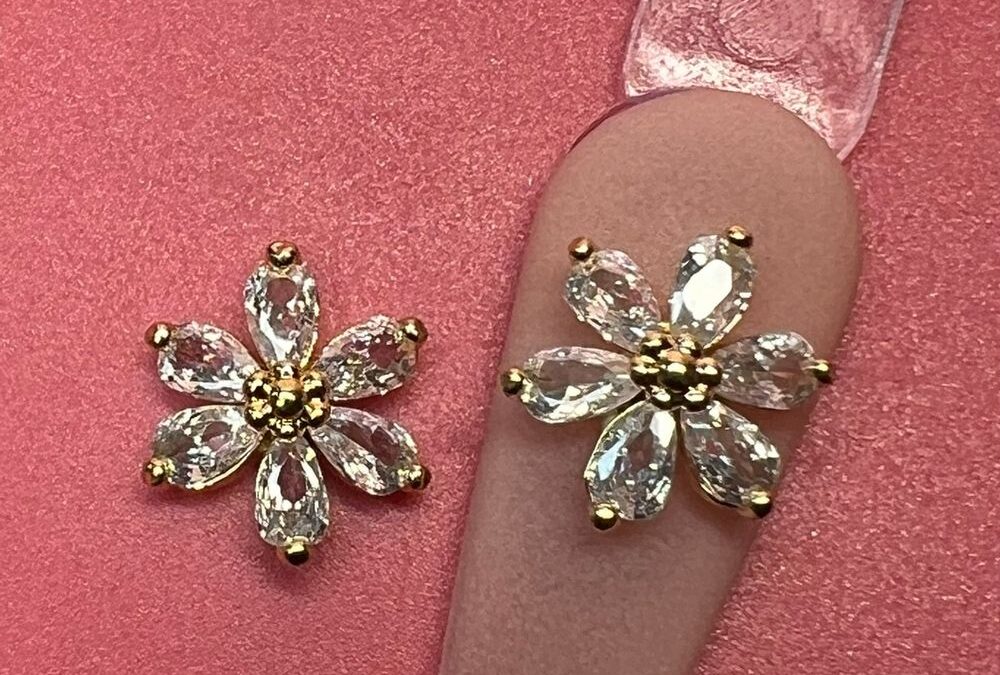
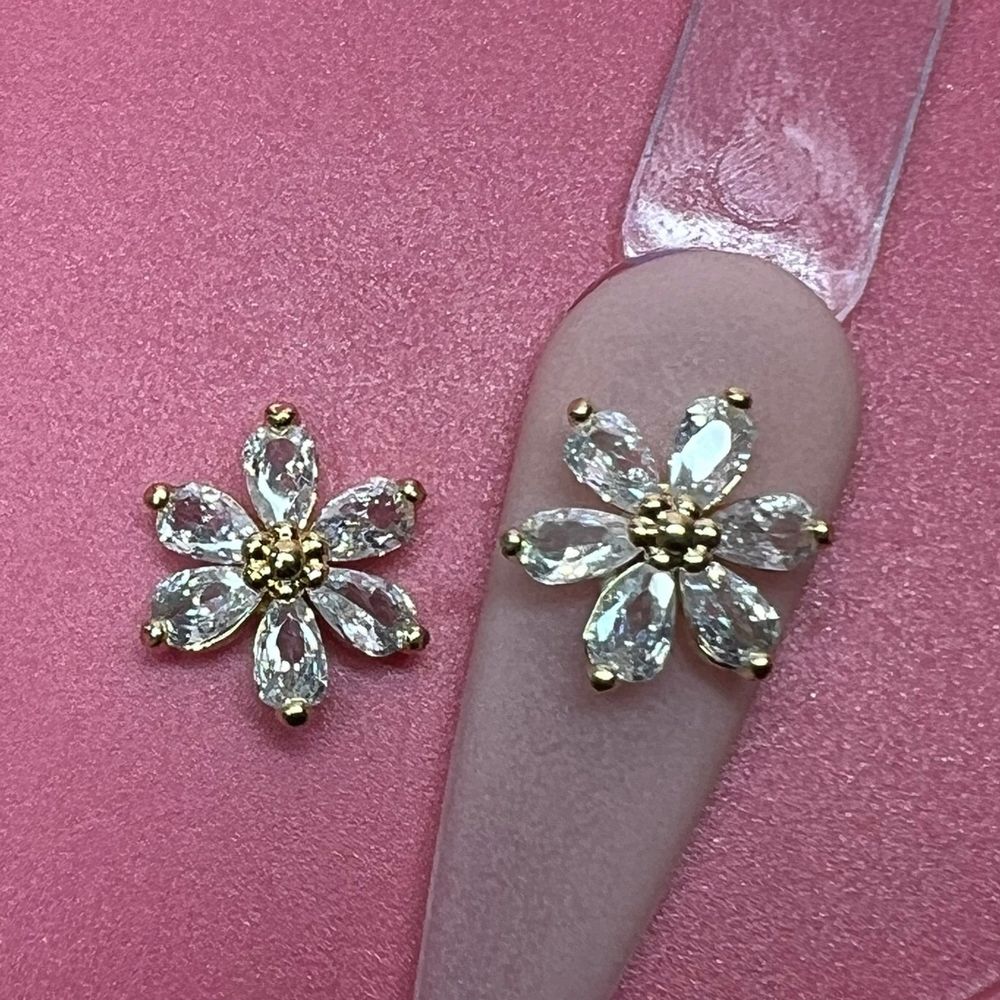
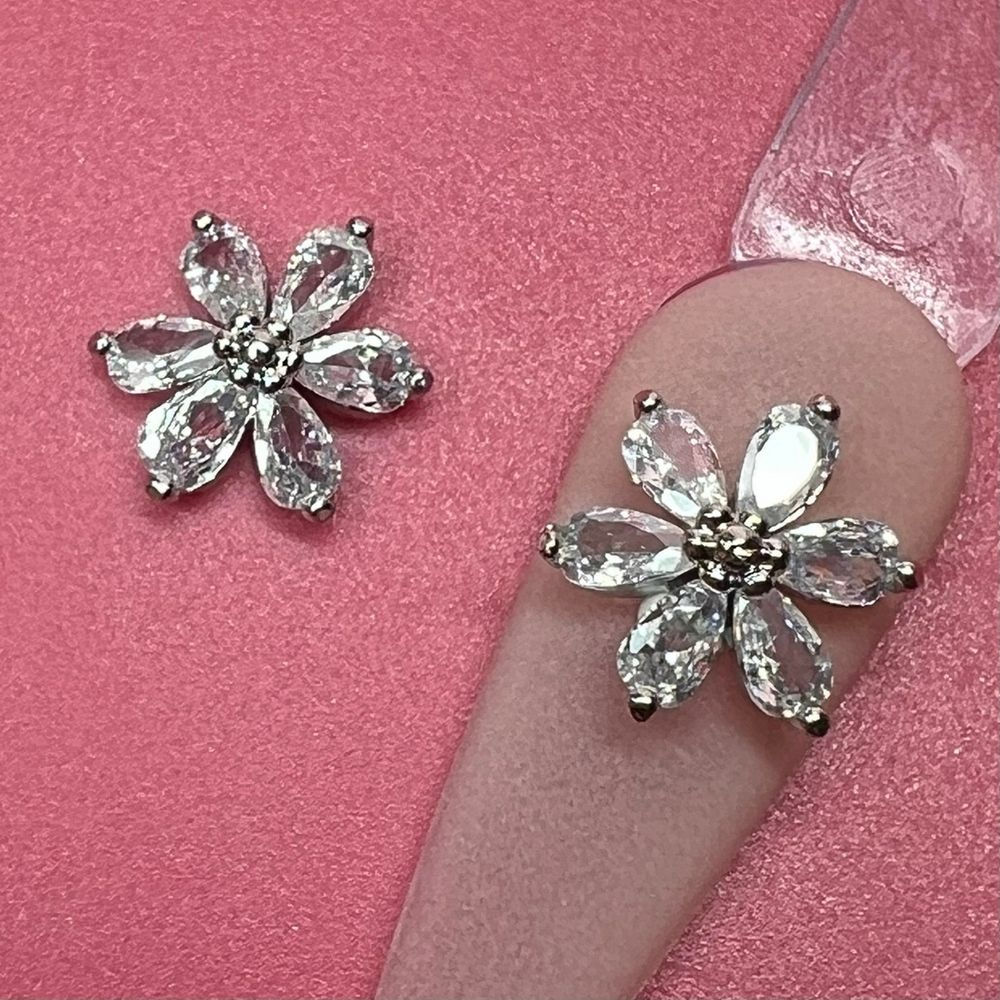
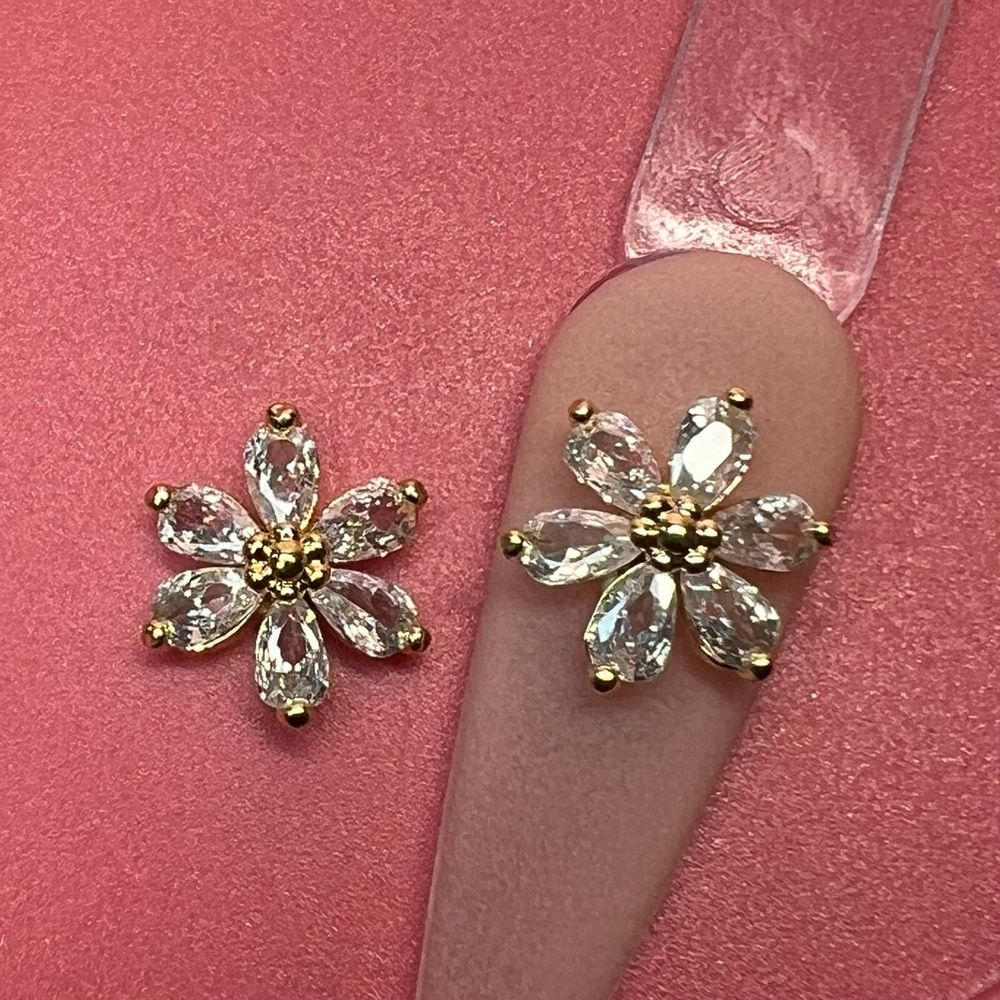
What does this add-on include? Two 3D flower charms with clear faceted rhinestones set in bright silver prongs, placed on a pale-nude base as accent nails. How should you present it to the client? Offer it as a two-piece accent service (ring and middle or ring and thumb) and describe the look: delicate crystal petals, polished silver settings, and a glossy protective finish.
Time estimate
How long will this add-on add to a standard bridal manicure? Plan 12–18 minutes when you stage materials ahead. Why the range? 12 minutes covers a single-application gel service with one tech; 18 minutes allows pick-and-place, final cure, and careful inspection. What if you place both charms on one hand as a cluster? Add 4–6 extra minutes for alignment and extra adhesive control.
Pricing strategy
How should you set price? Charge for skill, materials, and time. Consider a flat add-on fee that reflects the two-piece charm design and the handling required. For reference, the sampled retail pack is $4; factor material cost, adhesive, and labor to reach a profitable salon price. How to justify the fee to clients? Explain that you stage, seat, and finish each charm individually and include a finish coat to protect sparkle.
Prep and staging
What do you stage before the client sits? Prepare a pale-nude tip or confirm the client’s chosen base color; set two charms on a low-profile staging tray; place fine tip tweezers, micro-brush, and a low-viscosity gel adhesive at hand. Why stage both charms bright-side up? So you see the elongated teardrop petals and the clustered crystal center for accurate placement.
Step-by-step workflow
- Which base is best? Use a cured, flat pale-nude gel or acrylic canvas for consistent seating.
- How do you pick the charm? Use fine straight tweezers or a wax pick; approach the charm from the top to avoid touching prongs.
- How much adhesive? Apply a dot of low-viscosity gel adhesive to the nail where the charm will sit; under-apply rather than over-apply to prevent visible film.
- How to seat the charm? Place the six-petal flower so elongated teardrop petals align with the nail’s length; press gently to seat prongs on the surface.
- Do you cure immediately? Yes — tack-cure 1–2 seconds to set position, then final-cure 30–60 seconds per manufacturer directions.
- How do you finish? Use a thin layer of clear gel around but not over the top of the charm to preserve high-shine facets and mirror-metal prongs; cure and inspect.
Durability and inspection
What should clients expect for wear? With correct seating and finish, expect normal salon wear; set expectations that charms are small parts and may need rebonding over months. When should you inspect? Check charm seats during the final inspection and at the client’s follow-up if they return within two weeks. Why inspect closely? Small glossy adhesive film can dull facets if present and prongs must be seated to avoid snagging.
Finishing notes and safety
How do you protect sparkle without dulling it? Avoid sealing thickly over the crystals; instead, apply a thin clear coat around the base and cure fully. What safety notes apply? These are small decorative items; warn clients about potential choking risk for young children and advise careful hand use for the first 24–48 hours after service.
Pro tip: Stage each charm on a textured dusty-rose background or tray while you work to keep brilliant facets easy to see and avoid orientation errors.
Pro tip: Always perform a tack-cure before final cure — it locks position and reduces adhesive migration that can leave a visible film on crystal faces.
Client presentation & upsell language
How do you describe it at consultation? Say: “This two-piece crystal flower set creates a delicate bridal accent on a pale-nude canvas.” How to upsell? Offer a protective topcoat upgrade or a matching glitter accent for the opposite hand to complete a cohesive bridal look.
Final verdict
Who should offer this add-on? You, if you want a high-value, low-material-cost bridal upgrade that reads delicate and sparkly. Can a beginner master it? Yes — with staged tools, a steady pick-and-place routine, and the tack-cure step. Plan 12–18 minutes, price for material plus labor, and include an inspection and protective finish to keep sparkle long-lasting. For the exact two-piece crystal flower design used in this plan, see https://dynamicnailsupply.com/products/2-pcs-3d-flowers-charm-for-nails-art-design-crystal-rhinestones-engraved